Emergency Dentist in Cheltenham: What Counts as a Dental Emergency

If you are searching for an emergency dentist in Cheltenham, you may be dealing with a toothache that won't settle, a knocked-out tooth or a swollen face. It can be hard to tell what needs attention today and what can wait. This guide explains what counts as a dental emergency, what to do while you arrange care, and when to skip the dentist and call 000.
It covers the red-flag symptoms first, then common dental emergencies: knocked-out teeth, severe toothache, abscess and swelling, lost fillings or crowns, and soft-tissue injuries. It finishes with what happens at an emergency appointment and what to do outside opening hours.
This article is general information only. It is not a diagnosis. If you are unsure how serious your problem is, call a dentist or doctor.
When to Call 000 or Go to Hospital
Some problems are medical emergencies, not dental ones. Call 000 or go to your nearest hospital emergency department if you have:
- Swelling of the face, mouth or neck that is spreading or making it hard to breathe or swallow.
- Bleeding that does not stop after firm pressure.
- A head or facial injury, especially with confusion, vomiting or loss of consciousness.
- A suspected broken jaw.
- Swelling with a fever and feeling very unwell.
Do not wait to see a dentist if any of these apply.
What Counts as a Dental Emergency?
Dental concerns can vary in urgency, with some requiring prompt assessment and others suitable for routine care. As a general guide:
- Call a dentist as soon as you can for a knocked-out adult tooth, severe or worsening toothache, facial swelling without breathing or swallowing difficulty, a gum abscess, or heavy bleeding from the mouth after an injury.
- Book the next available appointment for a lost filling or crown without severe discomfort, a chipped tooth, or a rough edge that is cutting your tongue.
- Mention it at your next visit for mild sensitivity or minor gum soreness.
If you can't reach a dentist and your symptoms are getting worse, go to a hospital emergency department.
Knocked-out Tooth
A knocked-out adult tooth needs prompt dental care. What you do in the first minutes can matter.
- Pick the tooth up by the crown, the part you chew with. Avoid touching the root.
- If it is dirty, rinse it briefly with milk or saline. Do not scrub it.
- If you can, gently place it back in the socket and bite on a clean cloth. If not, keep it moist in milk, or hold it in your cheek if you are an adult and can do so without swallowing it.
- Do not store it in tap water.
- Do not try to put a baby tooth back in.
- Call a dentist straight away.
Seeing a dentist sooner is generally better for the tooth, but no outcome can be guaranteed. Our page on knocked-out tooth treatment has more detail.
Severe Toothache
Toothache has many causes, including decay reaching the nerve, a cracked tooth, an infection, or gum problems. See a dentist promptly if the pain:
- Keeps you awake or is throbbing.
- Comes with swelling, a bad taste or a fever.
- Is triggered by hot or cold and lingers.
- Has not settled after a day or so.
While you wait for your appointment:
- Rinse gently with lukewarm salty water.
- Use floss to clear any trapped food.
- Apply a cold compress to the outside of your cheek if it is swollen.
- Avoid very hot, cold or sweet foods.
- Do not place pain relief products directly on the tooth or gum. If you use over-the-counter pain relief, follow the label and ask a pharmacist or doctor if you are unsure.
Our toothache treatment page explains what your dentist looks for.
Dental Abscess and Facial Swelling
A dental abscess is a pocket of infection around a tooth or in the gum. Signs include a throbbing toothache, a pimple-like bump on the gum, a bad taste, swelling in the face or jaw, and sometimes a fever.
An abscess does not go away on its own, and infections can spread. See a dentist as soon as you can. If swelling affects your breathing or swallowing, or spreads towards your eye or neck, call 000 or go to hospital.
Do not try to drain it yourself. Rinsing with lukewarm salty water may help you feel more comfortable until you are seen.
Treatment depends on the cause. It may involve draining the infection, treating the tooth with root canal treatment or removing it. Our article on root canal vs tooth extraction explains how that decision is made. You can also read about dental abscess treatment.
Lost Filling or Crown
A lost filling or crown is usually not a medical emergency, but the exposed tooth can be sensitive and more open to decay or damage.
- Keep the crown or filling if you have it, and bring it to your appointment.
- Keep the area clean and avoid chewing on that side.
- A temporary dental cement from a pharmacy may be used following the product directions. Do not use household glue.
- Call the practice to arrange a time.
You can read more about lost fillings, crowns, inlays and onlays.
Soft-tissue Injuries
Cuts to the lips, tongue, cheeks or gums often bleed more than expected.
- Rinse gently with water or lukewarm salty water.
- Apply firm pressure with clean gauze or a cloth.
- Use a cold compress on the outside to reduce swelling.
Go to hospital if bleeding does not stop, the cut is deep or gaping, or you have other injuries. See your dentist if teeth are damaged or loose. Our page on soft-tissue injuries in the mouth has more information.
Cracked or Broken Teeth
A cracked or broken tooth can be an emergency if it is painful, bleeding or has sharp edges. Keep any pieces, rinse with lukewarm water and call a dentist. See our page on broken tooth management.
What Happens at an Emergency Appointment
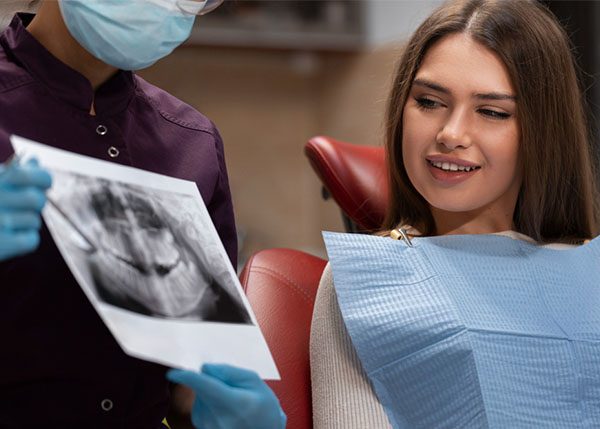
Every case is different, but an emergency appointment generally involves:
- Questions. Your dentist asks about your symptoms, when they started and your medical history.
- Examination and X-rays. These show what is causing the problem.
- Managing discomfort. Local anaesthetic may be used. Individual experiences vary.
- Treating or stabilising the tooth. This may be a filling, a temporary restoration, treatment of an infection, or removal of the tooth.
- A plan. Your dentist explains any follow-up treatment and what to watch for.
Emergency treatment sometimes solves the problem and sometimes stabilises it, with further treatment planned afterwards. Results vary between patients, and your dentist will explain the risks and limitations of what is proposed.
What to Tell the Practice When You Call
- What happened and when.
- Your symptoms, including any swelling, fever or bleeding.
- Any health conditions, allergies or products you are taking.
- Whether you still have a tooth, crown or filling piece.
This helps the team work out how urgent it is and how to prepare.
Outside Opening Hours
Dentist On Warrigal is open Monday to Friday, 9 am to 5 pm, and closed on weekends. If a problem starts outside those hours:
- Call 000 or go to hospital for the red-flag symptoms above.
- For other problems, follow the first aid steps in this article and call the practice when it opens.
- Public dental emergency services and hospital emergency departments may be options. Eligibility and availability vary.
Emergency Dentist FAQs
Does the practice see emergencies on the same day?
Call us as early in the day as you can. We will do what we can to fit emergencies in, depending on availability and how urgent the problem is.
Is there an emergency dentist open 24 hours?
We are open Monday to Friday, 9 am to 5 pm, and do not offer 24-hour care. Outside those hours, see the steps above.
Will emergency treatment fix the problem for good?
Sometimes. Other times it is a first step, and your dentist will explain what follow-up treatment may be needed.
Do you see patients from Mentone and Moorabbin?
Yes. We see patients from Cheltenham, Mentone, Moorabbin, Mordialloc, Bentleigh and Black Rock.
Call Us About a Dental Emergency in Cheltenham
Dental emergency, or not sure whether your problem counts as one? Call us as early in the day as you can.
At Dentist On Warrigal Cheltenham, our team will ask about your symptoms and do what we can to see emergencies on the day, depending on availability. For severe swelling affecting breathing or swallowing, uncontrolled bleeding or a serious injury, call 000 or go to your nearest hospital emergency department instead.
Call us on (03) 9583 5506. We are open Monday to Friday, 9 am to 5 pm. You can also read about dental emergency care in Cheltenham.
We are at Suite C, 151 Centre Dandenong Road, Cheltenham VIC 3192.
This article is general information and does not replace advice from a registered dental practitioner or doctor. In a life-threatening emergency, call 000. All dental procedures carry risks. Results vary between patients.