

Dental Bridges: Types, Cost and How They Work
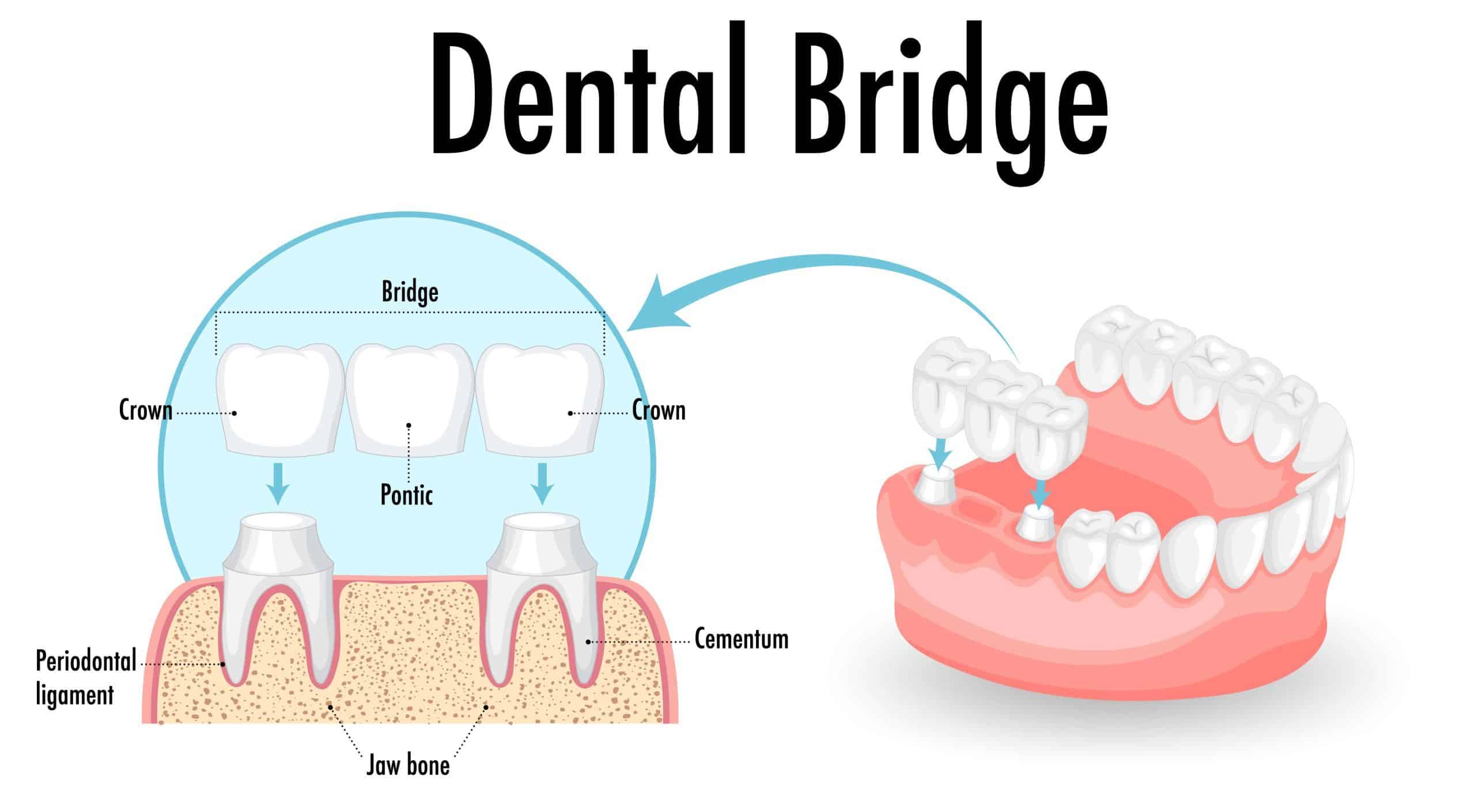
Losing a tooth is not only an issue that can influence your smile’s appearance. It can change the way you chew, speak, and even how your remaining teeth sit over time. One common option used to replace one or more missing teeth is a dental bridge.
If you’re exploring dental bridge types, wondering how long a bridge might last, or comparing a dental bridge vs. an implant, this guide breaks everything down clearly—so you can understand how dental bridges work and whether they may suit your situation.
What Is a Dental Bridge?
A dental bridge is a non-removable form of dental restoration that is employed to substitute one or more teeth that have been lost. It works by “bridging” the gap left by a missing tooth using a false tooth (called a pontic) that is supported by the neighbouring teeth, known as abutment teeth.
Dental bridges may be considered when:
- One or more teeth are missing in a row
- Adjacent teeth are strong enough to support a restoration
- You want a fixed (non-removable) option
- You’re looking for a shorter treatment timeline than some alternatives
For many patients in Cheltenham and surrounding suburbs, dental bridges can help restore everyday function—like chewing comfortably—while also supporting a brighter smile.
Types of Dental Bridges
There are several types of dental bridges, and the right option depends on where the missing tooth is located, the condition of nearby teeth, and your overall oral health.
Traditional Dental Bridge
This is the most commonly used type. Dental crowns placed over the teeth on both sides of the gap hold in place a pontic.
Commonly used when:
- Natural teeth are present on both sides of the missing tooth
Pros:
- Strong and stable
- Well-established option
- Suitable for back teeth
Considerations:
- Requires shaping of adjacent teeth
Cantilever Dental Bridge
A cantilever bridge is anchored on a crown on one adjacent tooth as opposed to two.
Commonly used when:
- There is only one neighbouring tooth available
Pros:
- Useful in specific situations
- Less tooth preparation than traditional bridges
Considerations:
- Not suitable for areas under heavy biting pressure
Maryland (Adhesive) Dental Bridge
In this type, a metal or ceramic structure is attached to the posterior of the adjacent teeth instead of crowns.
Commonly used when:
- Replacing front teeth
- Minimal tooth preparation is preferred
Pros:
- Conservative option
- Preserves natural tooth structure
Considerations:
- Less durable for chewing forces
- May not suit all bite types
Implant-Supported Dental Bridge
This bridge is not supported using natural teeth but rather dental implants that are inserted into the jawbone.
Commonly used when:
- Multiple teeth are missing
- Adjacent teeth are not suitable for crowns
Pros:
- Does not rely on neighbouring teeth
- Provides strong support
Considerations:
- Longer treatment timeline
- Requires sufficient bone health
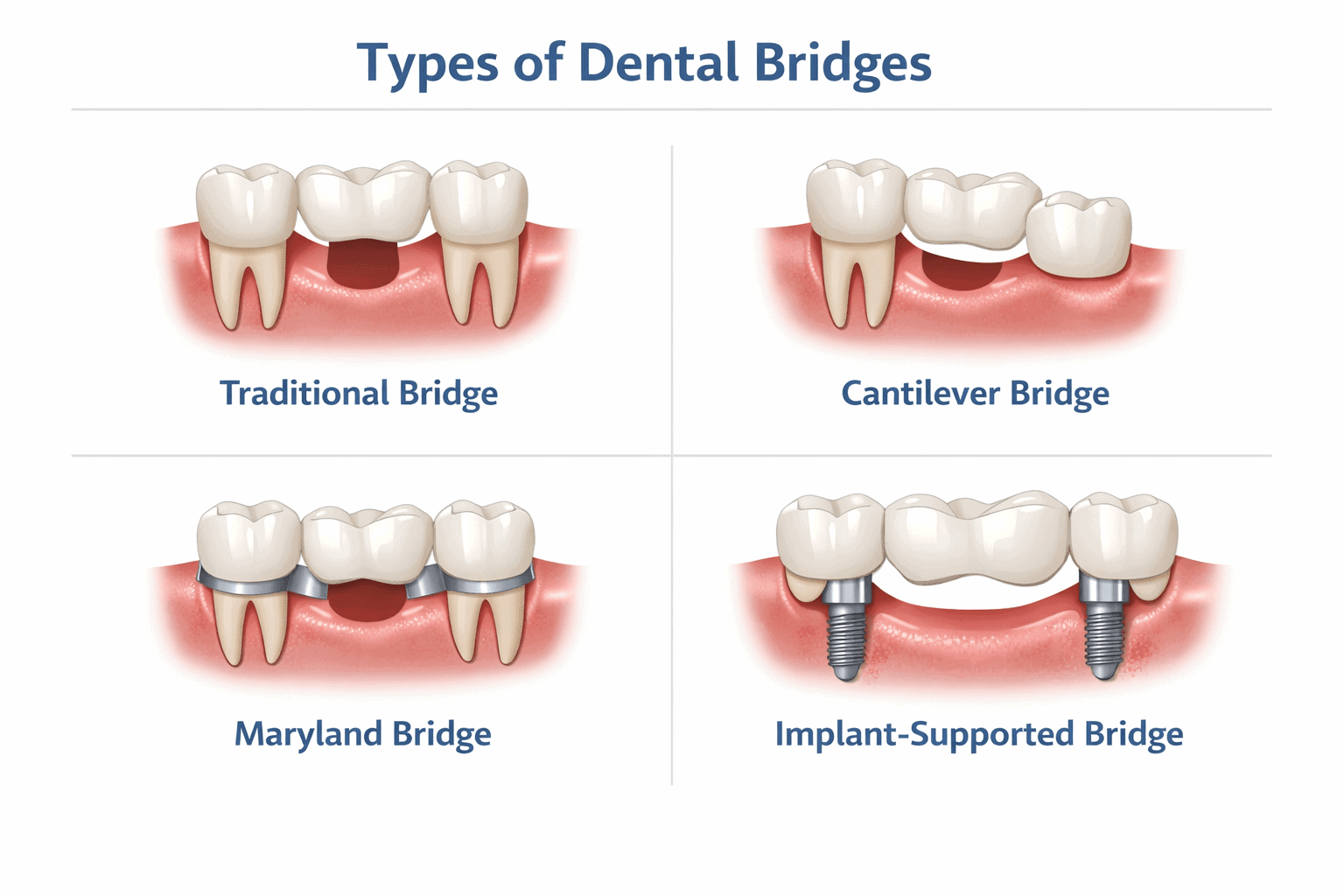
Comparison of Dental Bridge Types
| Type | Support | Key Benefit | Key Consideration |
| Traditional | Two natural teeth | Strong, reliable | Alters adjacent teeth |
| Cantilever | One natural tooth | Useful in limited cases | Not for heavy chewing |
| Maryland | Bonded wings | Conservative option | Less durable |
| Implant-supported | Dental implants | Independent support | Longer treatment time |
The Dental Bridge Procedure
The dental bridge process usually takes two to three visits, depending on the type of bridge used.
1. Preparing the Abutment Teeth
If a traditional or cantilever bridge is planned, the supporting teeth are carefully shaped to allow space for crowns.
2. Impressions and Temporary Bridge
Impressions are taken to create a customised bridge. During the construction of the permanent bridge, a temporary one can be erected to cover the site.
3. Fitting the Permanent Bridge
Once ready, the permanent bridge is checked for fit and comfort before being securely cemented into place. Patients visiting our Cheltenham dental clinic often find the process straightforward, with each step explained clearly so there are no surprises along the way.
How Long Does a Dental Bridge Last?
A common question is how long a dental bridge lasts. Dental bridges can last 5-15 years on average or even longer, depending on a number of factors.
Factors that can affect lifespan include:
- Oral hygiene habits
- The material used
- Bite forces and teeth grinding
- Regular dental check-ups
With good care and professional maintenance, many patients are able to use their dental bridge comfortably for many years.
Dental Bridge vs Implant: How to Decide
When comparing a dental bridge vs. an implant, there’s no one-size-fits-all answer. Each option has different considerations.
A dental bridge may be preferred if:
- Adjacent teeth already need crowns
- You want a shorter treatment timeframe
- Bone volume is limited
A dental implant may be considered if:
- Adjacent teeth are healthy and untouched
- Long-term tooth replacement is a priority
- Jawbone Health supports implant placement
A dentist can help assess factors such as bone health, tooth condition, lifestyle, and long-term goals before recommending an option.
Dental Bridge Cost in Australia
Patients often ask about the dental bridge cost in Australia. Costs can vary depending on:
- The type of dental bridge
- Materials used
- Number of missing teeth
- Complexity of treatment
Because every mouth is different, a personalised assessment is the best way to understand what treatment may involve. Rebates on health funds might also be offered based on your cover.
Caring for Your Dental Bridge
The care of a dental bridge is the same as that of natural teeth, with a few additional considerations.
Helpful tips include:
- Using floss threaders or super floss to clean under the bridge
- Interdental brushes for hard-to-reach areas
- Avoiding very sticky or hard foods
- Attending regular dental check-ups
Good daily care helps protect both the bridge and the supporting teeth.
Frequently Asked Questions
Can you eat normally with a dental bridge?
Most people return to normal eating once they adjust, although very hard or sticky foods should be avoided.
Can a dental bridge fall out?
While uncommon, bridges can loosen if the cement fails or if supporting teeth are affected by decay.
What happens if an abutment tooth decays?
Decay in a supporting tooth may compromise the bridge. Early detection through check-ups is important.
Is a dental bridge removable?
No, dental bridges are fixed restorations and are not removed for cleaning.
Does insurance cover dental bridges?
Some private health funds may offer benefits depending on your policy and waiting periods.
Dental Bridges in Cheltenham
If you’re considering dental bridges in Cheltenham, a professional assessment can help determine whether this option suits your needs. Our clinic at Dentist On Warrigal Cheltenham supports patients from Cheltenham as well as nearby suburbs, including Highett, Mentone, Moorabbin, and Bentleigh.
Whether you’re missing a single tooth or exploring different dental bridge types, understanding your options is an important first step toward maintaining oral function and a brighter smile.
Call us on (03) 9583 5506 or book online at a time that suits you.
Visit us at Suite C, 151 Centre Dandenong Road in Cheltenham.