Ozempic Teeth: What Cheltenham Patients on Weight Loss Drugs Need to Know

If you’re taking Ozempic, Wegovy, or Mounjaro and you’ve noticed your teeth feeling more sensitive, your gums looking puffier, or your mouth constantly dry — you’re not imagining it.
A growing number of patients on GLP-1 weight-loss medicines are reporting changes in their oral health, and dentists are starting to see this pattern in the chair. This is what’s being called “Ozempic teeth,” and if you’re on one of these medicines, here’s what you need to know before it becomes a bigger problem.
What Is “Ozempic Teeth”?
“Ozempic teeth” isn’t an official clinical diagnosis. It’s a term that’s emerged from patient reports and dental observations linked to GLP-1 receptor agonists — a class of weight loss and diabetes medicines that includes Ozempic, Wegovy, and Mounjaro.
What patients are reporting spans a range of oral health changes: dry mouth, enamel erosion, gum inflammation, increased tooth sensitivity, and, in more serious cases, tooth loss. These aren’t fringe complaints. They’re consistent enough that dental professionals are now asking about GLP-1 use as part of routine health histories.
The concern isn’t with the medicine’s intended purpose. These medicines are genuinely helping people manage weight and blood sugar. The issue is that the side effects — particularly around digestion, appetite, and hydration — create conditions that put teeth and gums at real risk if oral health isn’t actively managed alongside treatment.
Why Does This Happen?
There are four main mechanisms at work, and they tend to compound one another.
Reduced saliva flow
GLP-1 medicines slow down digestion and can reduce saliva production. Saliva isn’t just comfort — it neutralises acid, rinses away food debris, and keeps harmful bacteria in check.
When saliva flow drops, the risk of decay and gum disease rises significantly. A persistently dry mouth is one of the earliest warning signs that your oral health may be under pressure.
Nausea and vomiting
Nausea is commonly experienced, most often in the initial weeks of treatment. Vomiting exposes tooth enamel to stomach acid, which can cause erosion over time. Because enamel doesn’t regenerate, this damage is permanent if it’s not caught early.
Rinsing with water immediately after vomiting — and waiting at least 30 minutes before brushing — helps minimise acid exposure on the enamel surface.
Nutrient gaps from appetite suppression
These medicines work partly by reducing appetite, which means many patients are eating significantly less. When overall food intake drops, so does the intake of nutrients essential for oral health — calcium, vitamin D, and B vitamins all play a direct role in gum healing and bone integrity.
Deficiencies don’t cause overnight damage, but over weeks and months, they can slow the body’s ability to repair gum tissue and maintain the bone that supports your teeth.
Skipping oral hygiene when unwell
This one is straightforward but easy to underestimate. When you’re nauseous or fatigued, brushing and flossing often get skipped. Even a few weeks of inconsistent oral hygiene creates an environment where plaque builds up, gum inflammation sets in, and the risk of early decay increases.
It’s not about discipline — it’s about understanding that the medicine’s side effects can quietly disrupt habits that normally protect your teeth.
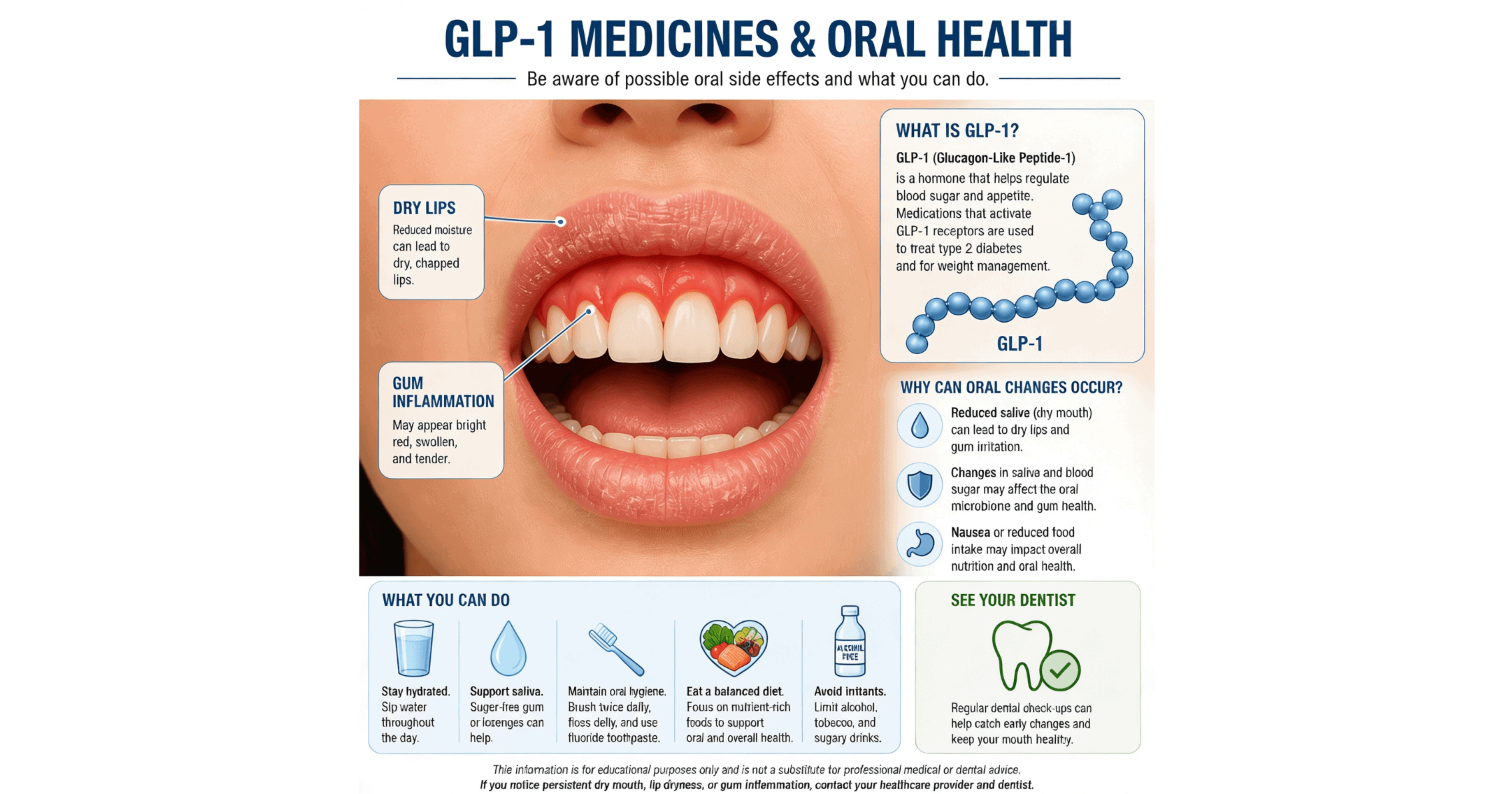
Signs Your Medicine May Be Affecting Your Teeth
Some of these signs show up gradually, which is why many patients don’t connect them to their medicine until the damage has already progressed.
Watch for:
- New or worsening tooth sensitivity to cold, heat, or sweet foods
- Bleeding or inflamed gums, especially when brushing or flossing
- Persistent bad breath that doesn’t improve with brushing
- A dry or sticky feeling in the mouth, particularly in the mornings
- Visible changes to tooth surfaces — looking thinner, more translucent, or worn
- Loose teeth or teeth that feel different when you bite down
- Cracked or chipped teeth without a clear cause
None of these should be dismissed as minor. They’re signals that something has shifted in your oral environment, and the earlier they’re addressed, the better the outcome.
How to Protect Your Teeth While on GLP-1 Medicine
Managing this isn’t complicated, but it does require consistency.
Stay hydrated throughout the day. Sipping water regularly supports saliva production and helps flush acids and bacteria from the mouth. Aim for plain water rather than flavoured or sparkling options, which can add acidity.
Keep your brushing and flossing routine. Even on difficult days, twice-daily brushing with fluoride toothpaste and daily flossing remains the foundation. If nausea makes this harder, a gentler technique or a smaller brush head can help.
Rinse after vomiting — don’t brush straight away. After vomiting, rinse thoroughly with water or a fluoride mouthwash. Wait at least 30 minutes before brushing. Brushing immediately after acid exposure spreads it over a larger area of the enamel surface.
Eat nutrient-dense foods even with a reduced appetite. Small amounts of calcium-rich foods (dairy, leafy greens, almonds) and foods with B vitamins support gum tissue health. If appetite suppression is significant, talk to your GP or dietitian about whether supplementation is appropriate.
Cut back on caffeine and alcohol. Both contribute to dry mouth and worsen the dehydration that is already common with GLP-1 treatment. If you regularly drink coffee or tea, this is worth considering.
When to See Your Dentist
Don’t wait for pain. Pain is often a late signal; by the time it arrives, the underlying damage is usually well established.
If you’re currently on a GLP-1 medicine like Ozempic, Wegovy, or Mounjaro, a dental check-up is recommended even if you have no noticeable symptoms. Early changes to enamel and gum tissue are far easier — and less costly — to manage than the damage that accumulates from months of untreated side effects.
Let your Cheltenham dentist know what medicine you’re on and how long you’ve been taking it. That context shapes what they look for during an examination and helps them provide you with more relevant maintenance advice between visits.
FAQ
Does Ozempic cause tooth decay?
Not directly. But the side effects — dry mouth, vomiting, reduced nutrient intake — create conditions that significantly increase the risk of decay if oral hygiene and hydration aren’t actively maintained.
If gum disease is detected early, is it reversible?
Gingivitis, the early stage of gum disease, is usually reversible with professional cleaning and improved home oral hygiene. More advanced gum disease (periodontitis) can be managed and stabilised, but not fully reversed. Early detection makes a meaningful difference in outcomes.
How often should I see the dentist while taking weight-loss medicine?
More frequently than the standard annual visit. Every six months is a reasonable starting point, though your Cheltenham dentist may recommend more regular monitoring depending on what they find.
Is dry mouth a permanent side effect?
For most patients, dry mouth is more pronounced in the early stages of treatment and may ease as the body adjusts. However, it can persist, and ongoing dryness should be discussed with both your GP and dentist, as there are practical strategies to manage it.
Oral Health Support in Cheltenham
If you’re on a GLP-1 medicine and haven’t had a dental check-up recently, now is the right time to book one.
At Dentist On Warrigal Cheltenham, we see patients from across Cheltenham, Highett, Mentone, Moorabbin, and Bentleigh who are managing the oral health effects of weight-loss medicines — and we’re here to help you stay ahead of potential damage before it develops into a bigger problem.
Call us on (03) 9583 5506 or book online. Visit us at Suite C, 151 Centre Dandenong Road, Cheltenham.